Linear A
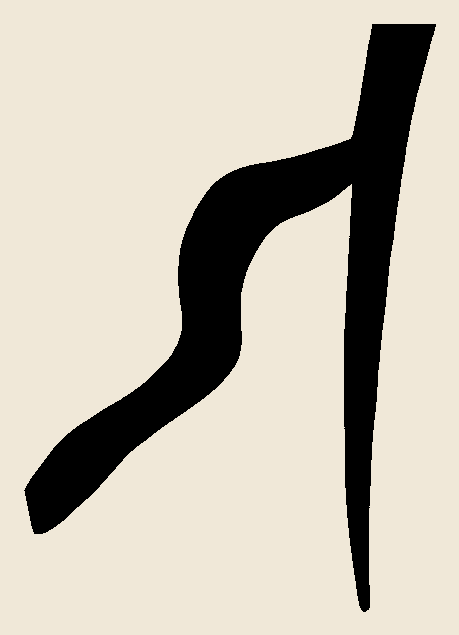
On the island of Crete, about 3,800 years ago, scribes scratched records into wet clay. We call that script Linear A. The Minoans used it for roughly four centuries — about 1800 to 1450 BCE — and then it fell out of use.
Around 1,500 inscriptions survive. The strange thing about Linear A is that we can pronounce most of its signs without understanding them — we can read it aloud and still not know what it says. After more than a century of effort, no one has identified the language behind it with confidence.
This site is a plain-language guide to what is actually known — kept deliberately conservative. Where scholars disagree, it says so; where the meaning is unknown, it says that too.
The accounting
The great majority of Linear A documents are administrative — the bookkeeping of the Minoan palaces: olive oil, wine, grain, sheep, and cloth, counted and tallied. At the bottom of many lists sits the word ku-ro, “total” — one of the very few Linear A words we are genuinely confident about, because it does exactly the job “total” does on a modern receipt.
Perhaps the oldest written prayer
At mountain-peak shrines across Crete, archaeologists have found stone vessels carrying Linear A that doesn’t look like accounting. The same opening sequence repeats from one sanctuary to the next, hundreds of kilometres apart, with small regional variations — so it reads like a fixed formula, perhaps a dedication or a prayer. It may be the oldest written prayer surviving from Europe — though, since we can’t read it, even calling it a prayer is an inference. What it says, we don’t know.
Why we can read the sounds
About 350 years after Linear A, Mycenaean Greeks adapted the script to write their own language — early Greek. That later version, Linear B, was deciphered by Michael Ventris in 1952. Because Greek runs in an unbroken line from there to today, the sound-values we read back into Linear A are careful reconstructions, not guesses — though never fully certain.
A family of scripts
Linear A was not alone. An older script — Cretan Hieroglyphic — was in use on the same island at the same time as early Linear A, and may be its parent. The famous Phaistos Disc is something else again. Linear A is one of the oldest writing systems in Europe, but not the oldest: Cretan Hieroglyphic appears to come first.
Where it was found
Linear A turns up at the Minoan palaces and towns — Knossos, Phaistos, Haghia Triada, Zakros, Khania — and at remote peak sanctuaries and sacred caves across the island. The same writing served the counting-house and the shrine.